


Introduction
When a GP refers you to a specialist in the UK, it can often feel like your request has disappeared. Many newcomers assume something has gone wrong because healthcare systems in other countries often work much faster or differently. You might wait weeks without hearing anything and it’s common to start worrying that your referral has been lost or forgotten.
If you are new to the UK, check out our Living in the UK Guide to see the full picture.
Table of Contents
Who Is This Guide For?
Most people new to the UK expect a simple queue where the first person to ask is the first person seen. When they don’t receive an appointment letter immediately, they feel anxious. They want to know the “hidden” rules of the system and how to ensure their healthcare needs are being met.
Behind the NHS Waiting List System
The NHS doesn’t work as a simple first-come, first-served queue. Instead:
- Clinical Priority: Specialists see the most urgent cases first, regardless of who was referred first.
- The 18-Week Standard: Under the NHS Constitution, the goal is for patients to start treatment within 18 weeks of being referred.
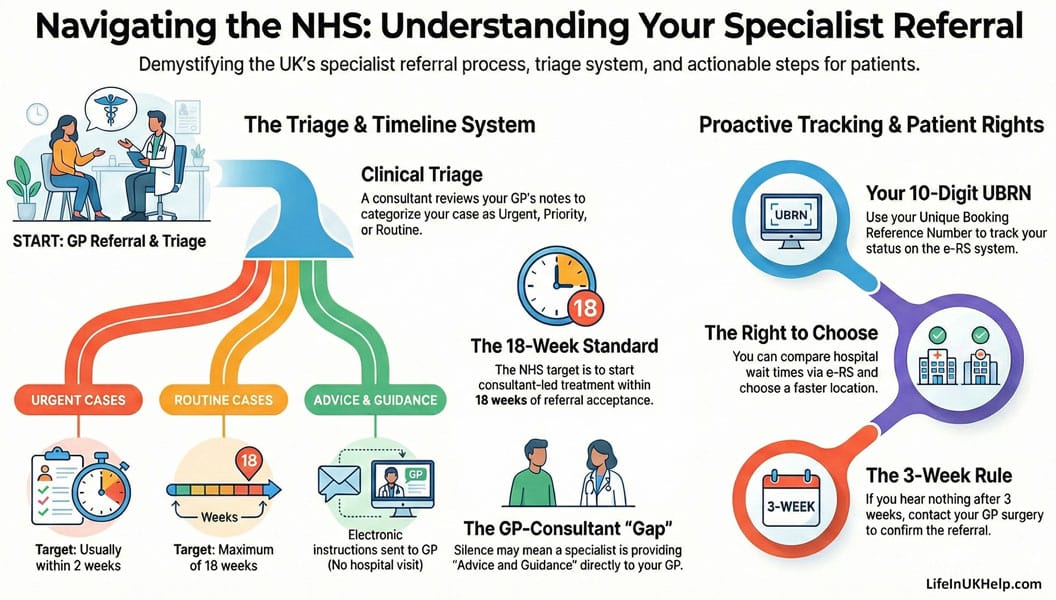
- Triage: A doctor at the hospital must “sort” your referral before you are given an appointment date.
Explanation
The NHS manages millions of patients by using a system called Triage. This means a specialist doctor (a consultant) reads your GP’s notes and decides how quickly you need care.
Did you know?
In many NHS referrals, you might never actually see a hospital doctor, but a consultant still reviews your case in the background and sends a full treatment plan to your GP.
The 18-Week Standard (RTT)
In England, you have a right under the NHS Constitution to start your consultant-led treatment within 18 weeks from the date your referral is accepted into the hospital system. “Consultant-led” means care that is planned and overseen by a hospital specialist doctor.
There are a few important things to understand about this:
- It is an NHS Target: This is a standard the NHS tries to meet but it is not a guaranteed deadline for every single patient. Due to high demand, “Routine” cases may sometimes wait longer.
- Urgent cases move faster: If your GP suspects a very serious illness, the target is much shorter (usually 2 weeks for the first appointment).
- The 18-Week “Clock”: This is how the NHS measures your waiting time. The “clock” can pause if you decline an appointment or miss a meeting.
The GP-Consultant “Gap”
A common reason for silence is a process called Advice and Guidance. Instead of booking a face to face appointment, the hospital specialist reviews your file and sends electronic instructions back to your GP on how to treat you. In this case, your referral has been successfully processed, even though you did not visit the hospital yourself.
The Referral Journey: Step by Step
Step 1
The GP Referral. Your GP sends an electronic request, usually via a system called e-RS (e-Referral Service).
Step 2
Clinical Triage. A specialist at the hospital reviews the notes to decide if your case is Urgent, Priority or Routine.
Step 3
The Waiting List. Your name is added to the list based on your triage level.
Step 4
The 18-Week Clock. The hospital tracks your case to try and meet the 18-week NHS standard.
Step 5
Booking. You receive a letter, text, or link to book your specific appointment date.
The e-Referral Service (e-RS)
Most referrals use the e-RS system. You will receive a letter or email with a “Booking Reference Number” and a password. You can log in to the NHS website to see waiting times at different hospitals. If one hospital has a much shorter wait than another, you can often choose the faster option if you are willing to travel.
Why You Might Hear Nothing for Weeks
If you do not hear anything for several weeks, it is usually an administrative delay not a sign that your referral is lost. Many patients contact their GP at this stage thinking the referral failed but in most cases the process is simply still moving behind the scenes. It likely means:
- Your referral is still being reviewed by a consultant during the Triage stage.
- You are in a “Routine” category, and the hospital is currently booking “Urgent” cases.
Tips and Warnings
- Confirm the Referral: If you have heard nothing after 3 weeks, call your GP surgery. Ask them to confirm the referral was sent and ask for the UBRN (your Unique Booking Reference Number, sometimes just called a “booking number”).
- Contact the Booking Office: Once you know which hospital has your referral, call their “Appointments” or “Booking” department directly to check your status.
- PALS: If you believe your 18-week standard is not being respected and you have no clear explanation, you can contact the Patient Advice and Liaison Service (PALS) at that hospital for support.
Official Information Source
For more details on your 18-week rights as a patient, visit the NHS waiting times guide.
Conclusion
The NHS is a prioritised system designed to treat the most urgent needs first. While the 18-week standard exists to protect you, the reality of the wait depends on your specific medical needs. Waiting for an NHS appointment can feel frustrating, but knowing your UBRN and understanding how triage works helps you feel more in control while you’re waiting for your appointment.
Frequently Asked Questions (FAQ)
1. How long does it take for my NHS referral to be reviewed?
It depends on the priority (Triage) level: Urgent cases (usually within 2 weeks) Priority cases (weeks to months) and Routine cases (NHS target is a maximum of 18 weeks). If you have heard nothing after 3 weeks, contact your GP surgery.
2. What is a UBRN and how do I find it?
The UBRN (Unique Booking Reference Number) is a 10-digit code for your referral. Ask your GP receptionist for it. This code proves your referral was officially registered and shows when your “18-week clock” started.
3. What should I do if 18 weeks have passed and I still don’t have an appointment?
First, get your UBRN from your GP. Then, call the hospital’s booking or appointments office. If the issue is not resolved, contact the PALS (Patient Advice and Liaison Service) at that specific hospital to ask why the 18-week standard is not being met.
4. Why have I heard nothing for several weeks?
This silence is usually not a sign of a lost file. It is often due to the “Triage” stage where a specialist is reviewing your clinical notes or you are in the “Routine” queue while the hospital treats more urgent cases first.
5. Can I choose a hospital with a shorter waiting list?
Yes! Using the e-RS system with your UBRN, you can view different hospitals and their current waiting times. Sometimes, traveling slightly further to a different hospital can save you many weeks of waiting.
Related Articles on ”Life in UK Help”
Not sure about something?
Ask your question in the comments! I check them regularly and answer so others benefit as well. For private inquiries, you can always use my Contact page.