


Introduction
This article has been written in plain English to make it easy to understand.
Many immigrants ask: can volunteering break my UK visa? The rules can feel confusing and nobody wants to risk their immigration status by mistake.
This article focuses on what Students and Skilled Workers must know before volunteering in the UK with a section also covering Spouse and Family visa holders. You will learn what is allowed, what is risky and how to protect yourself.
If you are new to the UK, check out our Living in the UK Guide to see the full picture.
Table of Contents
“This article is general information only. For personalised advice, always check GOV.UK or speak to a qualified immigration adviser.”
Why People Search for This Topic
Most people are not trying to break the rules. They are trying to:
- Gain UK experience
- Improve their CV
- Meet people in their community
- Support a charity
But they worry that:
- Volunteering may count as illegal work
- They may break their visa conditions
- Their future visa or settlement could be affected
The confusion usually comes from one key issue:
The legal difference between “volunteering” and “voluntary work”.
Short and Clear Answer
In most cases, volunteering will NOT break your UK visa if:
- You are not paid (except real travel or meal expenses)
- There is no contract
- You are not required to attend fixed hours
- You are not replacing a paid employee
- The organisation is a genuine charity or public body
It becomes risky if the role looks like unpaid employment.
Explanation
To answer the question can volunteering break my UK visa, you must understand two different terms used in UK immigration guidance.
Volunteering usually means:
- You help by choice
- You can stop at any time
- There is no employment contract
- You receive no wages
Voluntary Work is different. It may include:
- A contract (even informal)
- Fixed hours or a rota
- Duties similar to paid staff
- Regular benefits or payments
Under UK immigration rules published on GOV.UK, voluntary work may count as work. If your visa limits work, this can cause problems.
Did you know?
A simple volunteering role and “voluntary work” are NOT the same under UK immigration rules. An unpaid role can still be treated as work if it includes formal duties, fixed hours or a clear agreement between you and the organisation. If someone has a visa with work restrictions, not understanding this difference can create a risk, because some activities that look like volunteering may legally count as work.
Rules by Visa Type
Genuine volunteering normally does not count towards your weekly work limit.
Voluntary work does count towards your permitted hours.
If your visa says you cannot work, you must be extra careful to ensure the activity is genuine volunteering only.
Spouse or Family Visa
Most spouse visa holders can work without restriction. Volunteering is generally allowed, but it must still be genuine and unpaid.
Skilled Worker Visa
Holders of a Skilled Worker visa are generally permitted to engage in voluntary activities. To ensure the activity remains within the legal definition of “volunteering” and does not conflict with your primary sponsored role, it must meet the standard Home Office criteria: no replacement of paid staff, no contractual obligation, and no remuneration beyond reasonable expenses.
Important:
If you are in the UK on a Visitor visa, volunteering is usually allowed for up to 30 days, as long as it is with a registered charity and is not the main purpose of your visit. Always check your specific visa conditions before starting.
Step by Step Guide
Step 1: Check your visa conditions in your decision letter or online account.
Step 2: Confirm the organisation is a registered charity or recognised public body.
Step 3: Ask clearly: “Is this a volunteer role with no contract or fixed hours?”
Step 4: Make sure you only receive reimbursement for real expenses.
Step 5: Keep written confirmation of your role and save emails or agreements.
Where to Find Safe Volunteering Roles
If you want to find genuine volunteering opportunities in the UK, it is safer to use trusted platforms that work with registered charities and non-profit organisations.
Reach Volunteering
Reach is a UK website that connects volunteers with registered charities. Many roles are skills-based, such as mentoring, finance, marketing, or becoming a charity trustee. Because the organisations listed are official charities, the roles are more likely to meet the legal definition of genuine volunteering.(Reachvolunteering.org.uk)
Do-it
Do-it is one of the largest volunteering websites in the UK. You can search for opportunities near you by entering your postcode. You can also filter roles by interest or type of activity. Many UK charities post their volunteer roles on this platform, which makes it easier to find structured but genuine volunteering opportunities.(Doit.life/volunteer)
Before you accept any role, always read the description carefully. Check whether the role includes fixed hours, a rota, or any form of contract. If it does, ask the organisation to clarify whether it is volunteering or voluntary work.
Simple Example
Sam is on a Student visa. He helps at a charity shop twice a month. He chooses his own days. He receives no pay, only bus fare reimbursement.
This is genuine volunteering and is usually safe.
If the shop required him to work every Saturday for six hours under a rota, this could count as voluntary work and may affect his visa.
Important Things to Know
You can:
- Receive travel or meal expenses
- Volunteer with more than one charity
- Stop volunteering at any time
You should avoid:
- Volunteering for a private business
- Accepting gift cards or regular cash
- Signing documents that look like employment contracts
- Taking on a role that clearly replaces a paid staff member
Tips and Warnings
- Always ask questions before you start.
- If the organisation says you must attend at fixed times like an employee, this is a warning sign.
- If you are unsure, check official immigration guidance or speak to a qualified advicer before starting.
Volunteering and Your Future in the UK
Beyond gaining experience, certified volunteering is increasingly recognised as a key indicator of integration. Maintaining a record of your community service is a strategic move for those planning long-term residency (ILR) in the UK.
This means every Volunteer Agreement you sign, every letter from a charity and every email confirming your role has value beyond the present moment. Start keeping these records from day one.
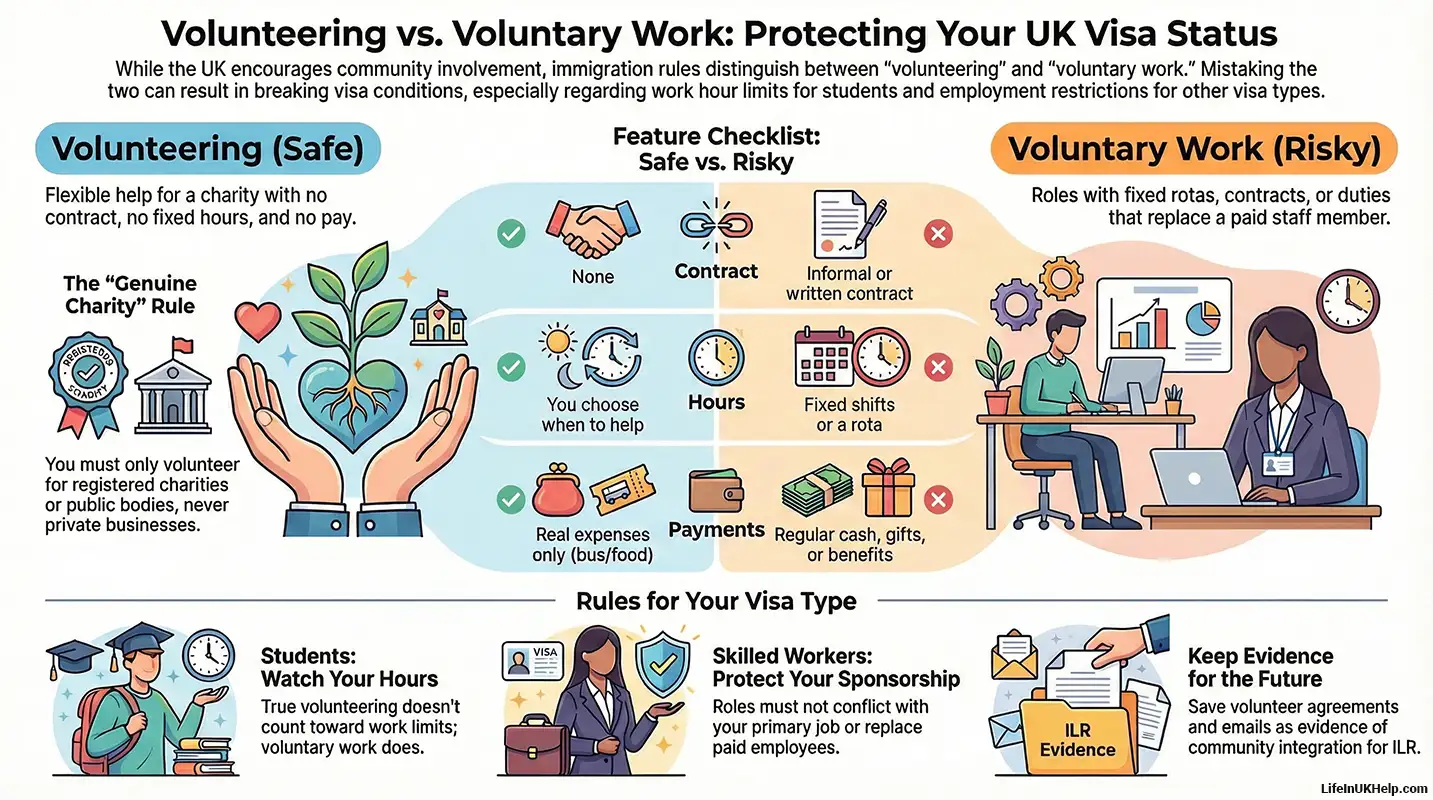
Volunteering vs. Voluntary Work. What’s Safe for Your Visa
Use the visual guide below to quickly understand what counts as safe volunteering and what could risk your visa.
Official Information Source
You can read the official immigration guidance on working and volunteering on GOV.UK. Always check the page for your specific visa type before starting any role.
Conclusion
For most visa holders, genuine volunteering is safe and allowed. The main risk comes when volunteering starts to look like unpaid employment.
What every student and skilled worker must remember is simple: check your visa conditions, ask clear questions and keep written records. Do this and you will not only protect your current visa status, you will be building a documented history of community contribution that can support your long-term future in the UK.
Frequently Asked Questions
1. I am a Student and already work 20 hours a week. Can I still volunteer on weekends?
Yes. You can volunteer if the role is real volunteering. This means:
• No contract
• No fixed hours
• No payments
These hours do not count towards your 20‑hour limit, as long as the role meets the legal definition of volunteering and does not amount to voluntary work.
However, if the role has fixed shifts or set duties, it is likely to be treated as voluntary work and that does count as work.
Always ask the charity to confirm what type of role it is.
2. My visa says “No Work Permitted.” Can I still volunteer?
In most cases, yes, but with caution.
“No Work” means you cannot do any kind of work or voluntary work. But volunteering is different because it has:
• No contract
• No obligation
• No payment
This is usually allowed. However, some visa types have special rules, so it is safer to check with your university or an immigration adviser.
3. Can I volunteer at a small business or my friend’s shop? They will not pay me.
No. Volunteering must be for:
• A charity
• A voluntary organisation
• A public sector body
Helping a private business ( even for free ) is considered unpaid work, not volunteering. This is not allowed for most visa holders.
4. The charity gives me free lunch and travel passes. Is this a problem?
Usually no. Volunteers can receive reasonable expenses, such as:
• Bus fare
• A meal during the shift
But you must not receive:
• Regular cash
• Gift cards
• Free products
• Anything that is more than your real costs
If you are unsure, ask the charity to explain what they provide.
5. I have a Skilled Worker Visa. Do I need permission from my employer to volunteer?
You usually do not need formal permission. But you must make sure the volunteering:
• Does not replace a paid worker
• Has no contract
• Does not pay you
• is not related to your main job role
Some employment contracts have rules about extra activities, so check your contract.
6. Will volunteering appear on my immigration record? Can it affect future visas?
Volunteering does not harm your immigration record.
In fact, it can be positive, because it shows you are active in the community. Keep documents such as:
• Volunteer Agreement
• Letters from the charity
• Emails confirming your role
Volunteering is increasingly recognised as evidence of community integration, which matters for ILR.
This article is for general information only and does not constitute legal advice. Immigration rules can change. Always check the latest guidance at GOV.UK or consult a qualified immigration adviser for advice specific to your situation.
Related Articles on ”Life in UK Help”
Still have questions?
Drop them in the comments section. I reply to every comment. If it’s something private, just send me a message through the Contact page.
I found a volunteer role, but they want me to sign a contract and work fixed hours. Is this safe?
Hi,This is a warning sign.If they ask you to sign a contract or follow fixed hours, it is probably voluntary work, not volunteering.
Voluntary work is treated like employment and could break your visa conditions.Ask the organisation to confirm that:
1. There is no contract
2. You can choose your own hours
If they cannot confirm this, do not start until you get proper advice.