


Leaving a rental property early can be stressful, especially if it’s your first time renting in the UK (see our Living in the UK for Beginners guide for more basics). The rules depend on whether you have a fixed-term tenancy or a periodic tenancy and the systems in England and Wales are slightly different. This guide explains the rules in simple language so you know what to expect, what you may need to pay, and how to leave legally without risking extra costs.
Tip: The laws in Scotland and Northern Ireland are different.
Simple Overview
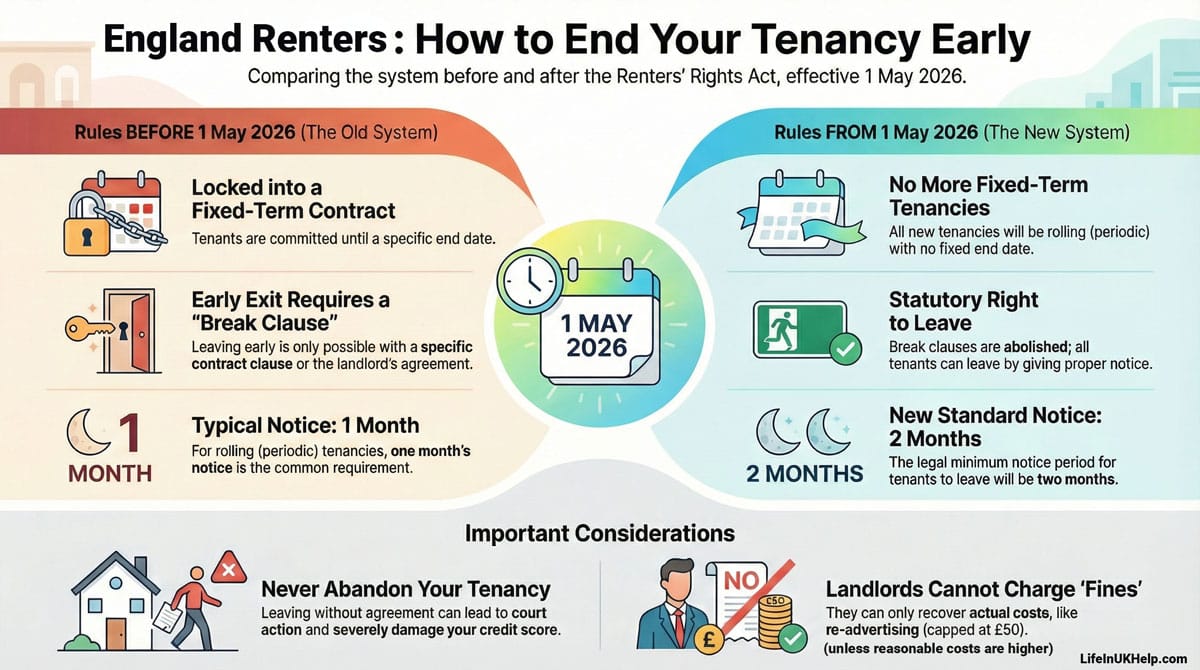
- Fixed-term tenancy: You can only leave early if you have a break clause or if the landlord agrees to end the contract early.
- Periodic tenancy: England, Usually 1 month (check GOV.UK and your contract ). Wales, The law requires 4 weeks’ notice for periodic contracts.
- Costs: Maximum £50 fee for contract changes (unless the landlord proves higher real costs). You may owe rent until a new tenant is found if you leave a fixed term early.
Important Reminder
Tenancy rules in the UK can change over time, so always check your contract and GOV.UK for the latest guidance.
Notice Periods Table
| Tenancy Type | Tenant Notice | Notes |
|---|---|---|
| Fixed-term AST | Break clause or landlord agreement | Most common type of tenancy |
| Periodic (England) | Check contract | |
| Periodic (Wales) | 4 weeks | Set by law |
How to Leave a Tenancy Early (Step by Step)
1. Identify Your Tenancy Type
A. Fixed-term tenancy
You are committed until the end date unless:
- Your contract includes a break clause, or
- Your landlord agrees to early surrender
B. Periodic tenancy
Your contract rolls from month to month (England) or week to week (Wales).
- England: Notice is usually 1 rental period, but always check your contract.
- Wales: Notice is 4 weeks by law.
2. Using a Break Clause (Fixed-Term)
A break clause allows you to end the tenancy early by giving written notice.
Common examples:
- “You may end the tenancy after 6 months with 2 months’ notice.”
If you have a break clause:
- Follow the exact wording
- Give notice in writing
- Keep proof of delivery
3. Early Surrender (Leaving Without a Break Clause)
If you need to leave before your fixed term ends:
- The landlord does not have to agree
- If they agree, they may ask you to cover:
- Rent until a new tenant moves in
- Reasonable re-letting costs (usually up to £50)
Tip: Offering to help find a replacement tenant often speeds up the process.
4. What You May Need to Pay
✔️ Allowed charges
- Rent until a new tenant is found
- Up to £50 for contract changes
- Cleaning or damage deductions (normal deposit rules)
❌ Not allowed
- “Fines” or penalty charges
- Random admin fees
- Extra charges not listed in the contract
Landlords cannot legally “fine” you for leaving early.
5. Never Leave Without Agreement (Avoid Abandonment)
If you leave without notice or agreement:
- You still owe rent
- The landlord can pursue you for arrears
- You may receive a County Court Judgment (CCJ)
- A CCJ affects your credit for 6 years
Always get written confirmation before handing back the keys.
Example Scenario
Sam is 4 months into a 12 month fixed-term tenancy.
He needs to move for work.
- No break clause
- He asks for early surrender
- Landlord agrees
So Sam pays:
- Rent until a new tenant is found
- £50 contract change fee
- His tenancy ends once the new tenant moves in
Official Information Source
This article is for general information only. For official and up to date guidance, you can check:
- GOV.UK: private renting rules
- Shelter England: ending a tenancy early
- Citizens Advice: housing advice
Frequently Asked Questions
1. Can my landlord fine me for leaving early?
No. Landlords cannot issue fines. They can only recover real costs.
2. Do I have to pay rent after I move out?
Yes, until your tenancy legally ends or a new tenant replaces you.
3. Can I leave a fixed-term tenancy early?
Only with a break clause or landlord agreement.
4. How much notice do I need to give?
A. England: Usually 1 month (check GOV.UK)
B. Wales: 4 weeks by law.
5. Will leaving early affect my deposit?
Only if you owe rent or caused damage.
Conclusion
Leaving a rental property early in the UK doesn’t have to be a nightmare, but you must follow the correct steps to protect your money. Remember the golden rule: Communication is key. If you are in a fixed-term contract, talk to your landlord as soon as possible. They are often more willing to negotiate if you are honest and offer to help find a replacement tenant.
Just make sure to get any agreement in writing so you have proof.
Related Articles
Still have questions?
Drop them in the comments section. I reply to every comment. If it’s something private, just send me a message through the Contact page.